
Veluna
Detect, analyze, and respond across Kubernetes, Containers, and Hosts — from a single platform.
What is Veluna?
Veluna is a unified cloud-native security platform running on weranaOS. Security teams access everything through a browser with nothing to install. Deploy the Sentry Agent (eBPF) on monitored hosts for real-time kernel-level visibility across Kubernetes, Containers, and Hosts.
Browser-based access
Security teams connect from anywhere, no install
eBPF kernel tracing
Collect every event at the kernel level
Single platform
Assets, threats, vulnerabilities, and policies in one place
Asset Visibility
Know exactly what assets you have and their security classifications in real time. Automatically discover Kubernetes, Container, and Host/VM assets and classify them by C·S·O security grade.
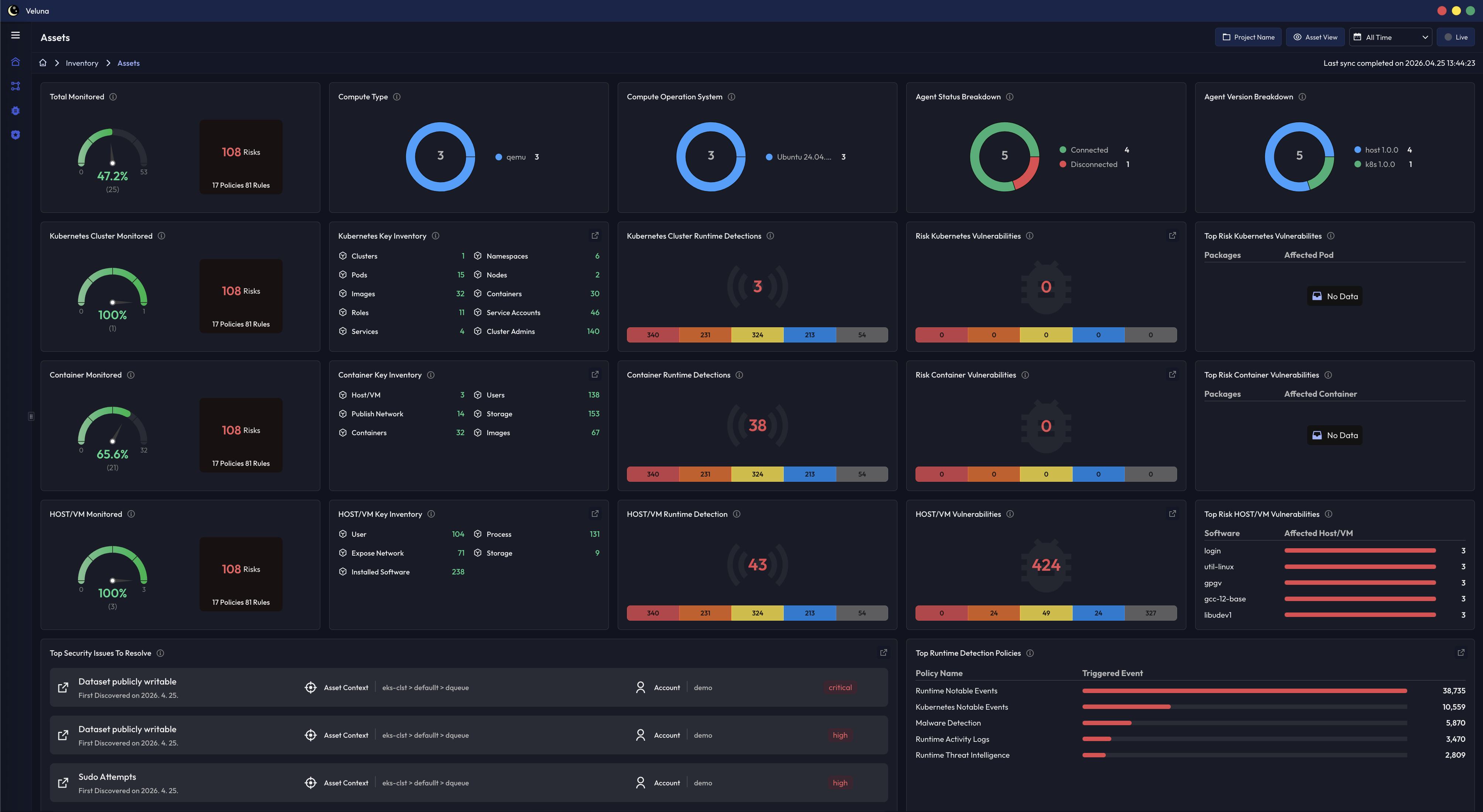
Auto asset discovery
Automatically find and inventory all Kubernetes, Container, and Host assets after Sentry Agent deployment.
C·S·O security classification
Classify assets as Confidential, Sensitive, or Open under N2SF standards and enforce differentiated controls.
Real-time change detection
Instantly detect new assets, deletions, and configuration changes and notify the security team.
Attack Surface Analysis
Visualize connections between clusters, nodes, and services as a topology and instantly identify high-risk nodes. Understand where you're most exposed and how an attacker could move laterally.
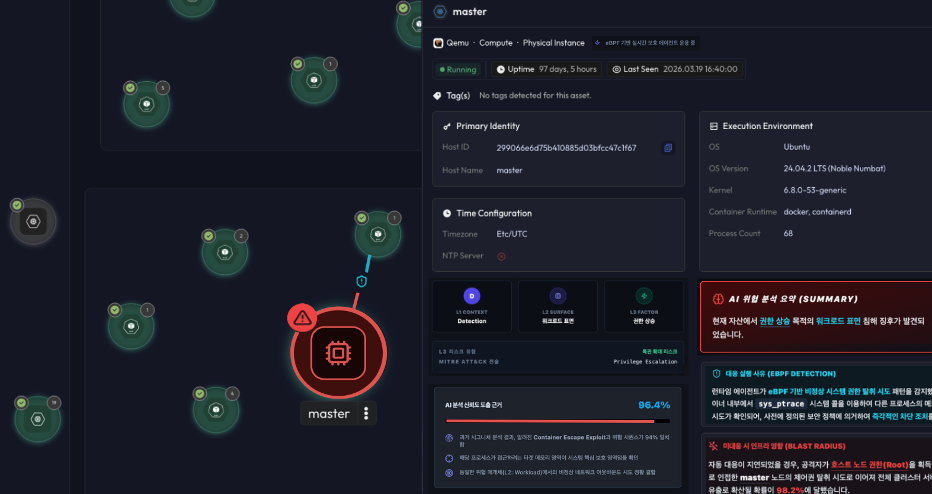
Network topology visualization
Represent actual communication paths between clusters, nodes, and services as a graph.
Instant risk node identification
Highlight the most dangerous assets by combining vulnerabilities, detections, and misconfigurations.
Lateral movement path analysis
Identify paths an attacker could take after initial compromise and close them proactively.
Network vulnerability detection
nmap scanning discovers open ports and services, while eBPF runtime tracing monitors real-time network communications across all applications. Combining static scanning with dynamic tracing ensures no network vulnerability is missed.
Threat & Config Detection
Most security incidents trace back to two root causes — runtime exploitation and misconfiguration. eBPF kernel tracing catches threats the moment they happen, while the same rule engine flags misconfigurations across OS, Container, and Kubernetes.
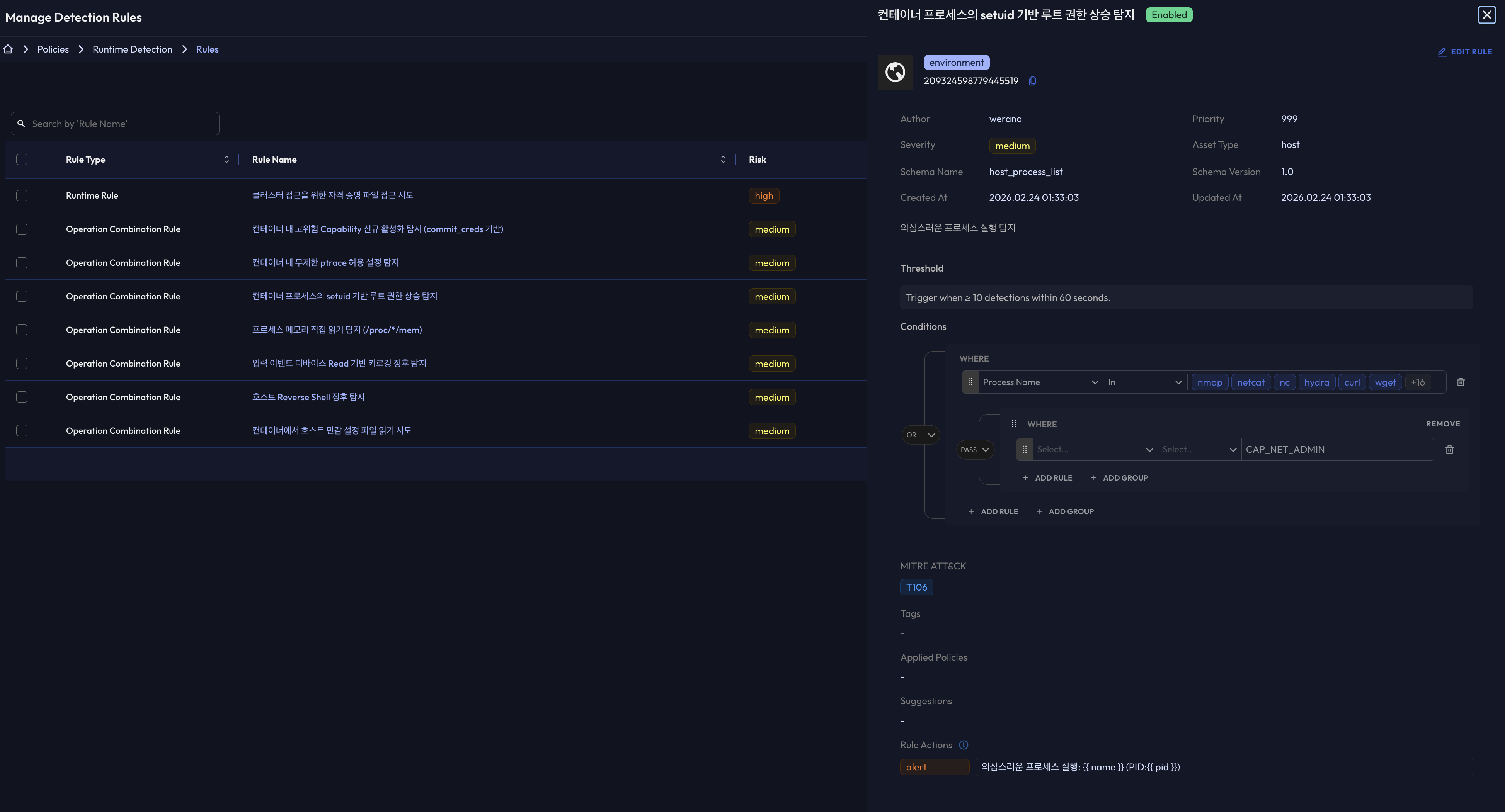
eBPF runtime threat detection
Directly trace kernel syscalls to detect privilege escalation, anomalous processes, and ransomware behavior instantly.
Misconfiguration detection
Identify misconfigurations across OS, Container, and Kubernetes with rule-based checks and remediation guidance.
No-Code rule builder
Define detection rules with a condition builder — no YAML or JSON. Security teams create and apply rules directly.
MITRE ATT&CK classification
Every detected event is classified by MITRE ATT&CK tactic and technique for immediate context.
Vulnerability Management
Not just a CVE list. Combines exploitability, patchability, and actual exposure to tell you exactly which vulnerabilities to fix right now.
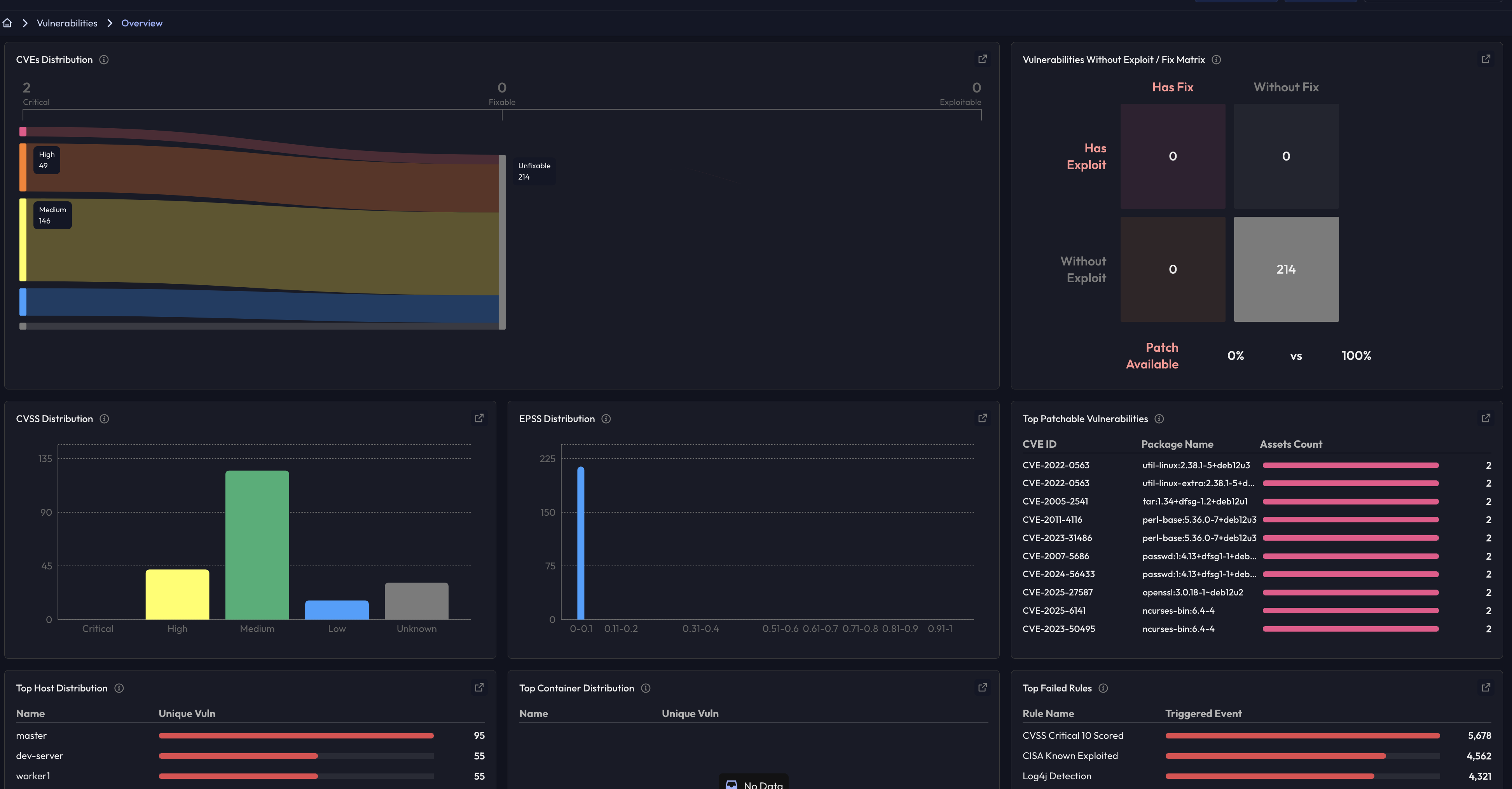
CVSS + EPSS prioritization
Analyze both severity (CVSS) and actual exploit probability (EPSS) to identify the most dangerous vulnerabilities now.
Patch availability classification
Separate immediately patchable vulnerabilities from those requiring workarounds to reduce operational burden.
Top vulnerable assets ranking
Instantly see which assets concentrate the most vulnerabilities and prioritize remediation.
Policy Management
Manage four policy types — operation rules, runtime tracing, combination rules, and audit policies — from a single interface. Define once, apply consistently across your entire infrastructure.
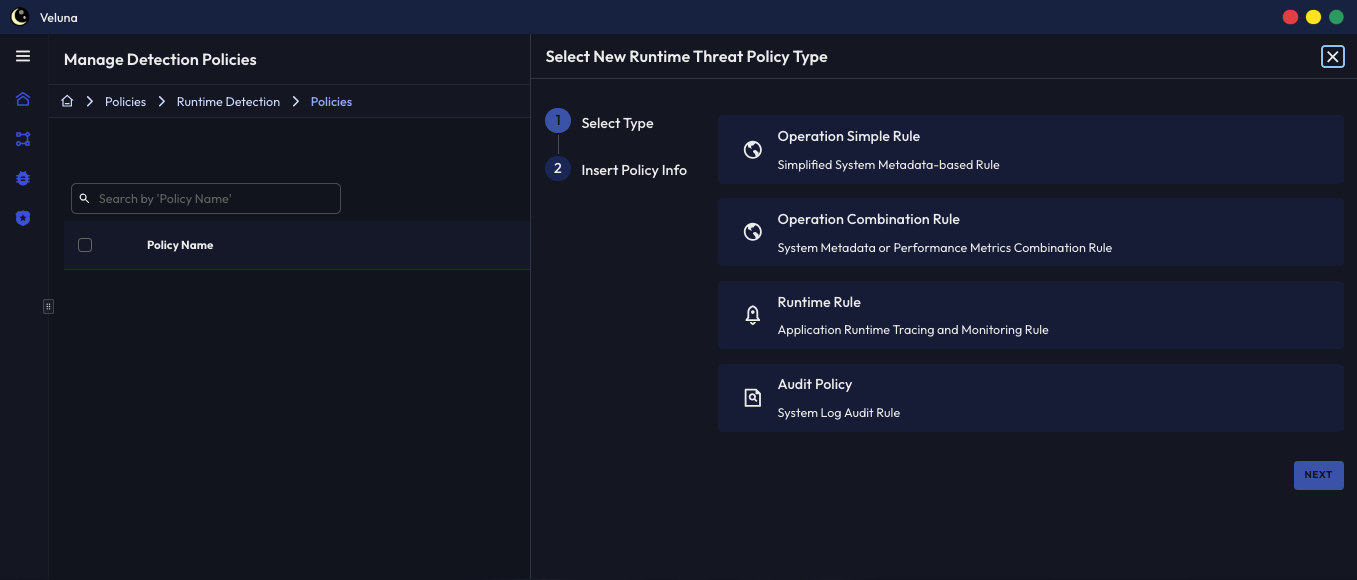
Four policy types
Manage Operation Simple, Combination, Runtime, and Audit policies from a single interface.
Consistent enforcement
Deploy the same policy to Kubernetes, Containers, and Hosts at once and monitor enforcement status in real time.
Change history tracking
Automatically record policy creation, modification, and deletion history as regulatory audit evidence.
Key Benefits
95%
Vulnerability noise reduction
CVSS + EPSS prioritization cuts through thousands of CVEs to surface only what needs action right now.
80%
Alert noise reduction
Environment-optimized rule tuning dramatically reduces meaningless runtime alerts so teams focus on real threats.
Instant
Asset visibility
Assets that were invisible after cloud migration are automatically discovered and classified the moment the agent is deployed.
Unified
Single platform
Consolidate assets, threats, vulnerabilities, and policies into one platform — eliminating tool sprawl and operational gaps.
Consistent
Multi-hybrid policy consistency
Apply a single policy uniformly across cloud, on-premises, and container environments. Change history is recorded automatically, cutting audit preparation time.
Full-layer
Proactive network vulnerability detection
Combining nmap static scanning with eBPF runtime tracing catches open ports, unauthorized communications, and abnormal traffic without gaps — finding network vulnerabilities before attackers do.
* Figures may vary depending on customer environment.
Find out if your environment has blind spots right now
30-min demo · Nothing to install
Start Free PoC